Wardogs Season 2 rain changes everything and here is how to survive the storm
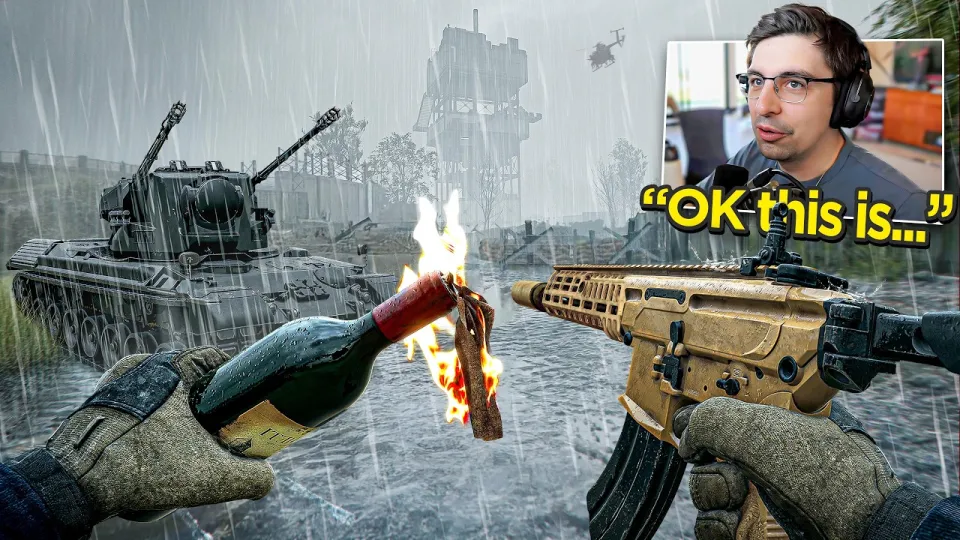
Video: Wardogs Is a Completely Different Game Now...
Want articles like this for your own video to promote it on YouTube and Google? Order them through the Telegram bot @sat_sit_bot. Articles with your video embedded are written and posted by the bot itself — on popular topical sites (no ads). Your first 50 articles are free.
· based on the channel shroud
Key takeaways
- Wardogs Season 2 introduces heavy rain as a match-wide weather condition that reduces visibility at range.
- Sniping past roughly 190 meters becomes unreliable in the rain because targets blur into the weather.
- HP ammunition aimed at the legs is the counter to armored opponents, but only if you actually hit the legs.
- Infrared goggles gain value in rain because thermal detection cuts through reduced visual clarity.
- A squad of six on comms faces roughly twenty uncoordinated players, so numbers rarely equal coordination.
Wardogs Season 2 has turned rain into a real tactical layer, not a cosmetic effect: visibility drops, long-range duels fall apart and every rotation across open ground becomes a gamble. If you want to keep winning in the storm, you have to rebuild your loadout, your sightlines and your movement instead of playing the map the way you did in dry weather. You can follow the full session and the channel's bonus audio content through the shroud Spotify show.
What the rain actually changes in Wardogs Season 2
The rain is a match-wide condition that compresses the effective combat range of every weapon on the map. In dry weather a scoped rifle owns the middle of the map; in the storm, targets past roughly 190 meters smear into the grey and the shot becomes a guess rather than a calculation. Players who built their whole game around holding a long angle suddenly find themselves fighting at 60 to 100 meters, where assault rifles and submachine guns are just as good or better.
Three concrete effects stand out:
- Visibility at distance collapses, so spotting a player before they spot you is far less reliable.
- Sound cues shift, because rain masks footsteps and distant gunfire, which makes audio reads less trustworthy than usual.
- Rotations across open terrain become riskier, so hugging buildings, ridges and tree lines matters more than raw speed.
Why sniping feels gutted and what to run instead
The most common complaint about the new weather is that sniping no longer pays for its weight, and that complaint is fair. A bolt-action rifle that costs a fortune and occupies your primary slot gives you a weapon whose main advantage, reach, is exactly what the storm removes. If you cannot see a silhouette cleanly at 190 meters, you are paying sniper prices for a mid-range rifle with a slow fire rate.
A practical rain loadout looks like this:
- Primary: an assault rifle or a hard-hitting submachine gun you can control inside 100 meters.
- Ammo: HP rounds, especially if your squad expects armored opponents.
- Optic: something with a wide field of view rather than maximum magnification; a 4x you cannot use is worse than a 1x you can.
- Utility: infrared goggles, which many players expect to become even stronger in rain because thermal detection sidesteps the visibility problem entirely.
Keep one long gun in the squad if you like, but treat it as a tool for the rare clear lane, not as the backbone of your kit.
The HP ammo lesson everyone keeps relearning
HP ammunition is the answer to armored targets, and it only works when the bullets land on legs. The pattern repeats in almost every rain session: a player is told to shoot legs, confirms the instruction, then empties a magazine into torso and head, watches the target survive, and concludes that the gun is the worst in the game. The weapon was never the problem.
How to actually execute it:
- Confirm your magazine is loaded with HP rounds before the fight, not during it.
- Aim at the legs deliberately; recoil will pull you up into the torso, so compensate downward.
- Do not reload in the open in front of a player who already shot you; break line of sight first.
- If a target is behind cover, reposition instead of dumping rounds into the wall.
A submachine gun with HP rounds that nobody realizes is loaded is one of the most underrated tools in the game, and it can clear a whole squad if the shooter remembers where to point it.
Positioning, bases and rotations in bad weather
Rain rewards players who build and hold ground instead of roaming. A fortified position with a roof, tight interior angles and a single covered approach is worth more in a storm than in clear weather, because attackers have to cross open ground while you watch the one lane they can use. Groups that spend a match stacking a base into something genuinely defensible create a problem no amount of individual aim solves quickly.
A few rules that hold up:
- Fight from cover to cover; crossing a field in the rain is not stealth, it is just slower dying.
- Clear buildings properly. If someone shoots you from inside, do not walk in, open your inventory mid-fall and start repacking magazines; the shooter is still there.
- Use the weather to break contact. If a fight goes bad, the rain covers a retreat far better than it covers an attack.
- Watch your health thresholds honestly. Calling out a number that is lower than reality gets you pushed by your own squad and killed by the enemy.
Squad size versus squad coordination
Numbers on the scoreboard are not the same as numbers in a fight. A lobby of roughly twenty uncoordinated players spread across separate voice channels will lose to a group of six who share one comms channel, call targets and move together. The rain amplifies this: when visibility is poor, information from teammates replaces what your eyes cannot confirm, and a team that talks well effectively sees twice as far as a team that does not.
The practical takeaway is to invest in communication before you invest in gear. Consistent callouts, agreed directions and a shared plan for where to fall back beat a bigger, quieter group almost every time.
Typical questions from players trying the new weather
Players coming back to the game after the weather update tend to ask the same things: whether sniping is dead, whether infrared goggles are now mandatory, and whether the storm is a permanent condition or a rotating one. The short answers are that long-range rifles are situational rather than useless, thermal optics are significantly more valuable but not required, and the rain changes how every fight resolves rather than removing any single playstyle. The rest comes down to practice in the new conditions.
Useful links from the session
- shroud on Spotify
- Logitech G products with the shroud promo code
- Maingear shroud reference PC build
- shroud on Twitter
- shroud on Twitch
Final thoughts on adapting to Wardogs Season 2
The rain in Wardogs Season 2 is not a visual gimmick; it is a balance change that pushes fights closer, makes information more valuable than reach and punishes players who refuse to change their kit. Bring HP rounds and use them on legs, keep your optics realistic for the range you will actually fight at, and treat every open field as a place you cross only when you must. The squad that talks and holds a defensible building will beat the squad that wanders, storm or no storm. This breakdown follows the session published by shroud, and you can keep up with the channel's audio content through the shroud Spotify show.
Source: Wardogs Is a Completely Different Game Now... · Markdown version
Questions & answers
Is sniping still viable in Wardogs Season 2 rain?
It is situational rather than dead. Past roughly 190 meters the rain blurs targets badly enough that scoped shots become unreliable, so a sniper rifle stops being a reliable primary. Keep one long gun in the squad for the occasional clear lane, but plan your main fights inside 100 meters where assault rifles and submachine guns dominate.
Why do players say a gun is bad after being told to shoot legs?
Because HP ammunition only pays off when it hits legs, and recoil naturally pulls aim up into the torso and head. A player who confirms the instruction and then keeps shooting center mass will watch an armored target survive and blame the weapon. Load HP rounds before the fight, aim low and compensate for recoil.
Do infrared goggles become stronger in the rain?
Yes, thermal detection sidesteps the reduced visual clarity that the storm creates, so infrared goggles gain relative value compared with ordinary optics. They are not mandatory, but if you already own a pair, the rain is the condition where they earn their slot most clearly.
Does a bigger squad guarantee a win in the new weather?
No. A group of roughly twenty players spread across separate voice channels usually loses to six players sharing one comms channel with clear callouts. Poor visibility makes teammate information more important than raw numbers, so coordination matters more in rain than in clear weather.